
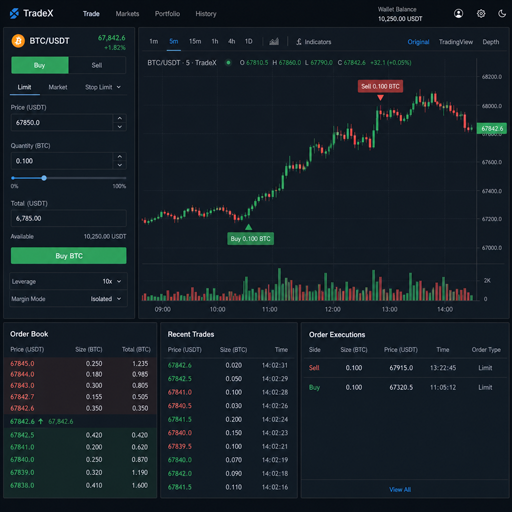
Algorithmic execution slippage is the difference between the price a trading algorithm expects and the price it actually receives once an order is completed. It matters because even a small gap can compound across high order volume, frequent rebalancing, or large institutional trades. Understanding where execution slippage comes from helps traders improve trading execution, reduce avoidable costs, and build more realistic expectations into algorithmic trading strategies.
What causes execution slippage in algorithmic trading?
Execution slippage in algorithmic trading is usually caused by changing market prices, insufficient liquidity, order size, latency, and the market impact created by the trade itself. A trading algorithm may decide to buy or sell at a visible price, but by the time the order reaches the market and interacts with available liquidity, that price may no longer be available. The result is a fill that is better or worse than expected.
Slippage is not always a sign that something has gone wrong. Markets move continuously, and every order has to compete with other participants. In fast, fragmented, or thinly traded markets, the difference between expected and actual execution can become more noticeable.
For algorithmic strategies, the challenge is that slippage is both a cost and a feedback signal. If a strategy looks profitable in testing but ignores execution slippage, its live performance may disappoint. If a strategy measures slippage carefully, it can adjust order routing, timing, size, and aggressiveness to improve execution efficiency.
Slippage is more than a price difference
Many traders define slippage as a simple subtraction: expected price minus actual fill price. That definition is useful, but it does not capture the full picture. In practice, slippage reflects the interaction between a strategy’s intention and market reality.
A buy order may slip upward if available sellers disappear or the algorithm has to cross the spread. A sell order may slip downward if buyers step back or the order consumes multiple levels of the order book. The larger and more urgent the order, the greater the chance that trading execution will move away from the intended benchmark.
There are also cases of positive slippage, where the trade fills at a better price than expected. Positive slippage can happen when prices move favorably, hidden liquidity appears, or order routing finds a better venue. However, traders should avoid relying on favorable surprises. Consistent execution quality comes from disciplined design, measurement, and adaptation.
The main types of algorithmic execution slippage
Not all slippage comes from the same source. Separating slippage into categories helps traders diagnose whether the issue is strategy design, market conditions, infrastructure, or order handling.
Timing slippage
Timing slippage occurs when the market price changes between the algorithm’s decision point and the order’s execution. This can happen in milliseconds or minutes, depending on the strategy and venue. For slower strategies, timing slippage may come from waiting too long to enter or exit. For faster strategies, it may come from latency in data processing, signal generation, routing, or exchange response.
The practical implication is simple: the price used in a model is not always the price available in the market. Any algorithmic trading system should distinguish between signal price, order submission price, and final fill price.
Spread-related slippage
The bid-ask spread is one of the most common sources of execution slippage. A strategy may value an asset based on the mid-price, but actual buying usually happens closer to the ask and selling usually happens closer to the bid. If a backtest assumes fills at the mid-price without accounting for the spread, it may overstate expected performance.
Spread costs become especially important for short-term trading algorithms. The more frequently a strategy trades, the more often it pays the spread or faces the risk of missing fills with passive orders.
Liquidity slippage
Liquidity slippage happens when the order is too large for the volume available at the desired price. A small order may fill at one price level, while a larger order may need to sweep through several levels of the order book. Each additional level can worsen the average execution price.
This is why order size relative to available liquidity matters more than order size in isolation. A trade that is small in notional terms can still cause slippage in a thin market, while a much larger trade may execute efficiently in a deep, highly liquid market.
Market impact
Market impact is the price movement caused by the trade itself. If an algorithm buys aggressively, other participants may detect demand and adjust their quotes. If it sells too quickly, it may push prices lower as it consumes available bids.
Market impact is especially important for large orders. The goal is not always to execute instantly; it is often to balance urgency against the cost of revealing intent or overwhelming available liquidity. A well-designed algorithm may slice an order into smaller pieces, vary timing, or use multiple venues to reduce visible pressure.
Why does algorithmic execution slippage matter?
Algorithmic execution slippage matters because it directly affects realized performance, risk control, and the reliability of a trading strategy. A model can identify a strong opportunity, but if the trade cannot be executed near the expected price, the edge may shrink or disappear. For high-turnover strategies, repeated slippage can become one of the largest hidden costs.
Slippage also affects how traders evaluate success. A strategy may appear to underperform because its signals are weak, but the real issue may be poor execution. Conversely, a strategy may generate good signals but require better order placement, routing, or liquidity analysis to become viable.
For portfolio managers and trading teams, slippage is also an accountability metric. It helps answer important questions: Did the algorithm trade too aggressively? Was the order sent at the wrong time? Was the benchmark realistic? Did market conditions change? Without slippage analysis, these questions are difficult to answer objectively.
Common benchmarks for measuring slippage
Slippage depends on the benchmark used. Choosing the right benchmark is essential because different benchmarks answer different questions.
Common execution benchmarks include:
- Arrival price: The market price when the order decision was made or when the order entered the execution system. This helps measure how much price movement occurred after the decision.
- Decision price: The price at the moment the trading signal was generated. This is useful when there is a delay between signal creation and order release.
- Volume-weighted average price: A market average weighted by traded volume over a defined period. This can help evaluate whether execution was favorable relative to broader market activity.
- Time-weighted average price: An average price calculated across time intervals. This is often used when the goal is steady execution over a period rather than immediate completion.
- Implementation shortfall: A broader measure that compares the theoretical value of a trade with the actual outcome, including price movement, partial fills, fees, and opportunity cost.
No single benchmark is perfect. A fast strategy may care most about arrival price. A large institutional order may care about implementation shortfall. A scheduled execution program may compare results with a time- or volume-based benchmark. The benchmark should match the strategy’s objective.
Factors that increase execution slippage
Slippage is not random noise alone. Certain conditions consistently make it more likely.
Key contributors include:
- Large order size relative to liquidity The more volume an order demands at once, the more likely it is to consume multiple price levels or signal urgency to the market.
- High volatility Fast price movement increases the chance that the expected price will change before the order is filled.
- Wide bid-ask spreads Wider spreads create a larger gap between theoretical valuation and executable prices.
- Aggressive order types Market orders and highly urgent execution instructions can improve completion speed but may accept worse prices.
- Thin or fragmented liquidity When liquidity is scattered across venues or disappears quickly, the algorithm may struggle to access the price it expects.
- Poor timing around market events News releases, earnings announcements, macroeconomic data, and opening or closing auctions can create sudden changes in liquidity and price behavior.
- Latency and infrastructure delays Even small delays can matter for strategies that rely on fast market data and quick order placement.
Understanding these factors helps traders decide whether slippage is an unavoidable market cost or something that can be reduced through better execution design.
How trading algorithms try to reduce slippage
Trading algorithms reduce slippage by controlling order size, timing, venue selection, and aggressiveness. The goal is to execute the desired trade while minimizing unnecessary price movement and avoiding poor fills. Different algorithms solve this problem in different ways.
Some algorithms prioritize speed. They are designed to complete the order quickly, even if that means accepting more market impact. Others prioritize patience, using passive limit orders and waiting for liquidity. Many practical systems use a flexible approach, becoming more aggressive when urgency rises and more passive when market conditions are favorable.
Order slicing
Order slicing breaks a large order into smaller pieces. Instead of sending the full order at once, the algorithm releases portions over time. This can reduce visible pressure and limit the risk of sweeping through the order book.
Slicing is not automatically better, though. If the market moves away while the algorithm waits, the delayed portions may execute at worse prices. Good execution design weighs reduced market impact against the risk of adverse price movement.
Smart order routing
Smart order routing looks for liquidity across available venues. In fragmented markets, the best displayed price may not be enough; execution quality can depend on queue position, hidden liquidity, fees, speed, and fill probability.
A routing engine may decide where to send an order based on price, depth, historical fill quality, and venue behavior. Better routing can improve execution efficiency, but only if the algorithm uses accurate data and avoids routing patterns that expose trading intent.
Limit order control
Limit orders help control the maximum price paid or minimum price accepted. They can reduce negative slippage by preventing fills beyond a chosen level. However, they introduce another risk: the order may not fill.
This trade-off is central to algorithmic execution. A passive order may achieve a better price but miss the opportunity. An aggressive order may complete quickly but pay more. Effective trading algorithms often adjust limit prices dynamically based on urgency, spread, volatility, and remaining order size.
Adaptive execution logic
Adaptive algorithms respond to real-time market conditions. If liquidity improves, the algorithm may increase participation. If spreads widen or volatility rises, it may slow down. If the order is falling behind schedule, it may become more aggressive.
This adaptability is one of the main advantages of algorithmic trading. Instead of relying on static rules, execution logic can react to what the market is actually doing.
Practical ways to monitor execution efficiency
Improving execution efficiency starts with measurement. Traders need a clear view of where slippage occurs, how often it happens, and whether it is concentrated in certain symbols, venues, order types, or market conditions.
A useful monitoring process should include:
- Pre-trade estimates: Forecast expected spread cost, market impact, and liquidity constraints before sending the order.
- Real-time alerts: Flag unusual slippage, missed fills, rapidly changing spreads, or venue-specific issues during execution.
- Post-trade analysis: Compare actual fills with relevant benchmarks and separate timing cost, spread cost, fees, and opportunity cost.
- Venue review: Track where orders receive strong fills, weak fills, partial fills, or slow responses.
- Strategy feedback: Feed execution results back into research so models reflect realistic trading costs.
The goal is not to eliminate all slippage. That is unrealistic in live markets. The goal is to identify avoidable slippage and make better decisions the next time similar conditions appear.
Backtesting must include realistic execution assumptions
A backtest that ignores slippage can create a false sense of confidence. If it assumes every trade fills at the close, the midpoint, or the last traded price, it may overlook the real cost of entering and exiting positions. This is especially risky for strategies with frequent trades, small expected edges, or exposure to less liquid instruments.
More realistic testing should include spread assumptions, order book depth where available, estimated market impact, latency assumptions, and partial-fill scenarios. The assumptions do not need to be perfect, but they should be conservative enough to prevent the model from depending on impossible fills.
It also helps to test multiple slippage scenarios. For example, a strategy may still work under normal execution costs but fail when volatility rises or liquidity falls. Stress testing execution slippage gives traders a clearer view of how robust the strategy may be in live conditions.
A simple checklist for reducing avoidable slippage
Before deploying or adjusting a trading algorithm, use a practical checklist to review the most common sources of execution problems.
- Define the correct benchmark for the strategy’s objective.
- Measure slippage separately by asset, venue, order type, and time of day.
- Compare order size with available liquidity before execution.
- Avoid assuming midpoint fills unless the strategy can realistically achieve them.
- Use limit prices where price control matters more than immediate completion.
- Adjust aggressiveness based on urgency, spread, and volatility.
- Review whether routing decisions are improving or hurting fill quality.
- Include market impact and partial fills in backtesting.
- Monitor live execution and investigate outliers quickly.
- Feed post-trade findings back into algorithm design.
This kind of process turns slippage from a vague complaint into a measurable execution variable. Over time, that can support better trading execution and more reliable performance evaluation.
Slippage cannot be removed, but it can be managed
Algorithmic execution slippage is a normal part of trading, not a defect that can be completely engineered away. Prices change, liquidity shifts, and orders interact with the market in ways that create cost and uncertainty. The best trading systems acknowledge that reality rather than hiding it behind optimistic assumptions.
The practical advantage comes from measurement and control. By understanding timing slippage, spread costs, liquidity constraints, and market impact, traders can design algorithms that fit the markets they trade. Better execution efficiency does not mean every fill is perfect; it means the process is disciplined, observable, and continuously improved.
For anyone building or evaluating trading algorithms, slippage should be treated as a core part of strategy design. A signal only becomes valuable when it can be executed effectively, and strong execution is often what separates theoretical performance from real-world results.
