
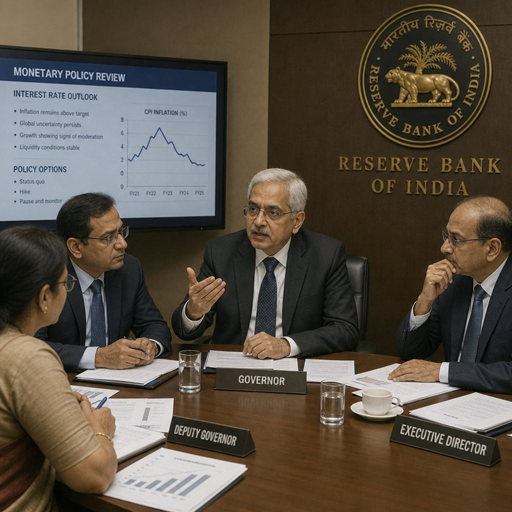
A hawkish rate hold is a central bank decision to keep interest rates unchanged while warning that policy may stay tight, or become tighter, if inflation does not cool. For investors, borrowers, businesses, and policymakers, hawkish rate hold signals matter because the “hold” is only half the message; the tone, projections, and guidance can still point toward economic tightening.
Understanding that difference helps readers interpret central bank decisions without overreacting to the headline. A pause can calm markets, but hawkish language can quickly reprice expectations across bonds, currencies, equities, credit, and business planning.
What do hawkish rate hold signals mean?
Hawkish rate hold signals mean a central bank has chosen not to raise rates immediately, but it is still emphasizing inflation control measures, restrictive policy, and the possibility of future hikes or prolonged high rates. In plain English, the bank is saying, “We are pausing for now, but we are not done fighting inflation.”
That distinction is important. A neutral rate hold suggests policymakers are waiting for more data and are not leaning strongly in either direction. A dovish hold suggests rate cuts could be closer if growth weakens or inflation falls. A hawkish hold, by contrast, keeps pressure on financial conditions even without a fresh increase in the policy rate.
Central banks use this approach when they want to avoid overtightening too quickly but also want to prevent markets from assuming that easier money is around the corner. If investors price in rate cuts too early, borrowing costs may fall, asset prices may rise, and financial conditions may loosen. That can work against the central bank’s inflation objective.
The message behind a hold can matter more than the hold itself
The headline decision is simple: rates are unchanged. The real information often sits in the statement, press conference, voting pattern, economic projections, and repeated phrases about inflation, labor markets, credit conditions, and risks.
A central bank may hold rates because earlier hikes are still working through the economy. Monetary policy affects the real economy with delays, so policymakers may want time to observe the impact on hiring, lending, spending, and inflation. At the same time, they may worry that inflation remains too persistent to justify an easier interest rate strategy.
This creates a careful balancing act. The bank does not want to raise rates unnecessarily if demand is already slowing, but it also does not want households, lenders, and financial markets to interpret a pause as victory. Hawkish monetary policy can therefore continue through communication, even when the policy rate itself is unchanged.
Common signs of a hawkish rate hold
Not every unchanged-rate decision is hawkish. The tone becomes clearer when several signals point in the same direction. Readers can look for the following clues in central bank decisions:
- Inflation remains the main concern. Policymakers continue to describe price pressures as elevated, persistent, or above target.
- Future hikes remain on the table. The statement or press conference avoids ruling out additional tightening.
- Rate cuts are discouraged. Officials push back against market expectations for near-term easing.
- Policy is described as restrictive but necessary. The bank may acknowledge slower growth while still prioritizing inflation control measures.
- Economic projections show stubborn inflation. Forecasts may imply that inflation will take time to return to target.
- The vote is split toward more tightening. Some policymakers may prefer a hike, even if the majority supports a hold.
- Language focuses on data dependence. This often means the next move is not pre-committed, but upside inflation surprises could trigger a response.
One phrase alone rarely tells the whole story. Markets usually respond most strongly when the statement, forecasts, and press conference all reinforce the same hawkish message.
Why would a central bank hold rates while sounding hawkish?
A central bank may hold rates while sounding hawkish because it wants to slow the economy without adding unnecessary shock. Keeping rates unchanged gives policymakers time to assess incoming data, while hawkish guidance helps maintain discipline in financial markets and inflation expectations.
This is especially useful when the economy is sending mixed signals. Inflation may still be too high, but growth may be cooling. Employment may remain resilient, but consumers may be showing strain. Credit may be tightening, but wages or services prices may still be firm.
In that environment, another rate hike could increase recession risk, while a soft message could loosen financial conditions too soon. A hawkish hold sits between those extremes. It tells markets that the tightening cycle may be paused, but not necessarily finished.
This approach also preserves flexibility. If inflation falls convincingly, the central bank can maintain the hold or eventually shift toward easing. If inflation reaccelerates, officials can argue that they clearly warned markets that further economic tightening remained possible.
Financial market impact across major asset classes
The financial market impact of hawkish rate hold signals can be significant because markets move on expectations, not just current policy. Even when rates do not change, investors may adjust their assumptions about future borrowing costs, risk appetite, and corporate earnings.
Bonds and yields
Bond markets often react quickly to hawkish guidance. If investors believe policy rates will stay higher for longer, short-term yields may rise or remain elevated. Longer-term yields can also move higher if markets expect persistent inflation, larger term premiums, or a longer period of restrictive monetary policy.
For bondholders, this can create price pressure, especially in longer-duration securities. For income-focused investors, however, higher yields may create more attractive entry points over time. The key is that a hold does not automatically mean bond yields will fall.
Currencies
A hawkish hold can support a country’s currency if it suggests that interest rates will remain relatively high compared with other economies. Higher expected yields may attract capital, particularly when other central banks are closer to cutting rates.
Currency reactions are rarely one-dimensional, though. Exchange rates also depend on growth expectations, risk sentiment, trade conditions, and global capital flows. If hawkish policy increases recession fears, currency strength may be limited or uneven.
Equities
Stock markets may initially welcome an unchanged rate decision, then pull back if the central bank’s tone reduces hopes for rate cuts. Growth-oriented stocks can be sensitive to higher expected discount rates, while banks, insurers, and defensive sectors may respond differently depending on the broader outlook.
The earnings backdrop matters. If companies can maintain margins and demand remains steady, equities may absorb hawkish guidance. If borrowing costs are already weighing on consumers and businesses, a higher-for-longer message can pressure valuations.
Credit and lending
For businesses and consumers, hawkish monetary policy can keep financing conditions tight. Banks may maintain stricter lending standards, floating-rate debt may stay expensive, and refinancing may remain challenging.
This is where the real economy feels the effect. Companies may delay expansion, households may reduce discretionary spending, and borrowers may prioritize cash flow protection. Even without a new hike, the signal can reinforce caution.
A practical checklist for interpreting the next rate hold
A disciplined reading process helps prevent headline-driven reactions. Before concluding that a hold is hawkish, neutral, or dovish, review the decision in layers:
- Start with the statement. Look for changes in wording about inflation, growth, employment, and financial conditions.
- Compare the tone with the previous meeting. Hawkishness is often about direction: did the central bank sound more concerned than before?
- Check projections if available. Inflation, unemployment, growth, and policy-rate forecasts can reveal the path officials expect.
- Listen for pushback. If policymakers reject early rate-cut expectations, the hold is likely more hawkish.
- Watch market pricing after the announcement. Bond yields, currencies, and equity indexes show how investors interpret the message.
- Separate the first reaction from the lasting one. Markets can reverse after analysts digest the full press conference and details.
- Connect policy to your own exposure. Borrowers, savers, investors, and business owners experience the same decision differently.
This checklist is not about predicting every market move. It is about understanding the policy signal clearly enough to make better-informed decisions.
Interest rate strategy for businesses and households
For businesses, a hawkish hold is a reminder to plan around the possibility that borrowing costs stay elevated. That may mean reviewing debt maturity schedules, stress-testing cash flow, preserving liquidity, or delaying projects that only work under cheaper financing assumptions.
For households, the implications depend on the type of debt and savings profile. Variable-rate borrowers may remain exposed to high interest costs, while savers may continue to find better yields on cash-like products than they did in easier policy periods. Homebuyers may need to evaluate affordability under conservative assumptions rather than hoping for quick relief.
Investors should avoid treating a hawkish hold as a simple buy or sell signal. The better question is whether a portfolio is too dependent on rapid rate cuts, low volatility, or expanding valuations. A more resilient approach may include attention to duration, credit quality, sector exposure, liquidity, and time horizon.
None of this means panic is necessary. It means assumptions should be updated. When central banks emphasize inflation control measures, plans built around immediate easing deserve a second look.
The risk of misreading hawkish monetary policy
The biggest mistake is assuming that “no hike” means “tightening is over.” That can lead investors to take on too much duration, businesses to overcommit to expansion, or borrowers to delay refinancing decisions without a clear plan.
The opposite mistake is also possible. A hawkish hold does not guarantee another rate increase. Sometimes it is a communication tool designed to keep inflation expectations anchored while policymakers wait for earlier tightening to work.
The best interpretation is conditional. A hawkish hold says the central bank remains more worried about inflation than about offering immediate relief. Future decisions will depend on incoming data, but the burden of proof may be on inflation to improve before policy becomes meaningfully easier.
Key takeaways
- Hawkish rate hold signals combine an unchanged policy rate with firm language on inflation and restrictive policy.
- The tone of central bank decisions can move markets as much as the rate decision itself.
- A hawkish hold often supports a higher-for-longer interest rate strategy.
- The financial market impact can appear in bond yields, currencies, equities, and credit conditions.
- Businesses and households should treat the signal as a reason to test assumptions, not as a reason to overreact.
Final thoughts
A hawkish rate hold is a pause with pressure still attached. It tells markets that policymakers are willing to wait, but not willing to declare the inflation fight finished. For anyone following central bank decisions, the practical lesson is to read beyond the headline and focus on the full policy message.
When the language points to economic tightening, inflation control measures, and caution around future easing, the hold itself may be less reassuring than it first appears. The smartest response is not to guess the next meeting perfectly, but to build financial decisions that can withstand a longer period of restrictive policy.
