
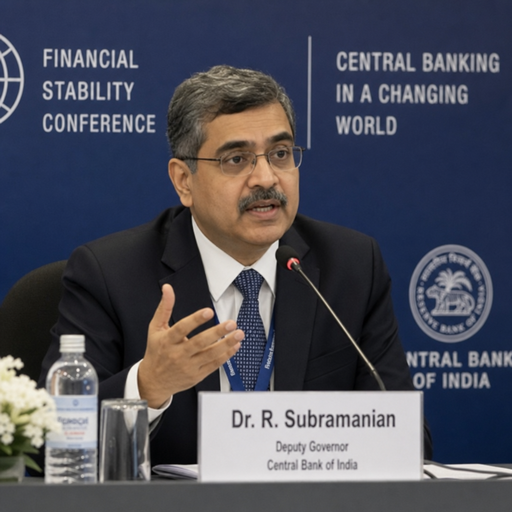
Central bank communication can move markets even when no formal rate decision is on the calendar. Unscheduled central bank speeches matter because they may clarify policy thinking, calm volatility, correct market assumptions, or prepare investors for future monetary policy updates. For traders, analysts, businesses, and anyone watching interest rates, the key is not only hearing the words but understanding their timing, tone, and context.
What are unscheduled central bank speeches?
Unscheduled central bank speeches are public remarks, interviews, panel comments, or statements from central bank officials that occur outside the normal calendar of policy meetings, press conferences, and planned testimony. They may be delivered at conferences, during media appearances, after sudden market moves, or in response to economic data that has changed the policy conversation.
Unlike scheduled central bank announcements, these remarks are often less formal. They may not include a policy decision, a vote, or a full economic forecast. Still, they can be highly influential because markets are constantly trying to interpret how policymakers view inflation, employment, growth, financial stability, and interest-rate risk.
The word “unscheduled” does not always mean accidental or improvised. A central bank may choose a less formal channel when it wants to send a signal without making an official policy move. That signal can be subtle, but in interest-rate markets, subtle changes in language often matter.
Why these speeches attract so much attention
Central banks guide economies partly through action and partly through communication. Interest-rate decisions are important, but expectations about future decisions can be just as powerful. When a policymaker speaks unexpectedly, market participants ask one immediate question: does this change the path of policy?
An unscheduled speech can influence expectations in several ways. It may reinforce the current policy stance, push back against speculation, warn that inflation remains too high, or suggest that economic weakness is becoming harder to ignore. Even when no new decision is announced, the speech can affect bond yields, currency prices, equity sentiment, lending conditions, and business confidence.
This is why investors watch not just the message, but the messenger. A comment from a central bank governor, chair, president, or voting policy member may carry more weight than remarks from a less influential official. The market also considers whether the speaker has recently been aligned with the majority view or known for a more hawkish or dovish perspective.
The difference between speeches and formal announcements
Formal central bank announcements usually follow a predictable process. They often include a policy decision, a written statement, updated projections, minutes, or a press conference. These communications are designed to represent an official institutional view, even when members disagree internally.
Unscheduled speeches are different. They may reflect the view of one official rather than the full committee. They may be exploratory, conditional, or designed to shape expectations before a formal meeting. That makes them useful, but also risky to overinterpret.
A practical way to separate the two is to look at authority and specificity:
- Formal announcements usually communicate decisions, votes, guidance, and official policy language.
- Scheduled speeches often expand on known themes, explain recent decisions, or prepare audiences for future debates.
- Unscheduled remarks may respond to new information, market stress, political pressure, or sudden shifts in financial conditions.
The strongest signals usually appear when unscheduled remarks are consistent with recent monetary policy updates and are later echoed by other officials. A single comment can matter, but repeated messaging across multiple speakers is more reliable.
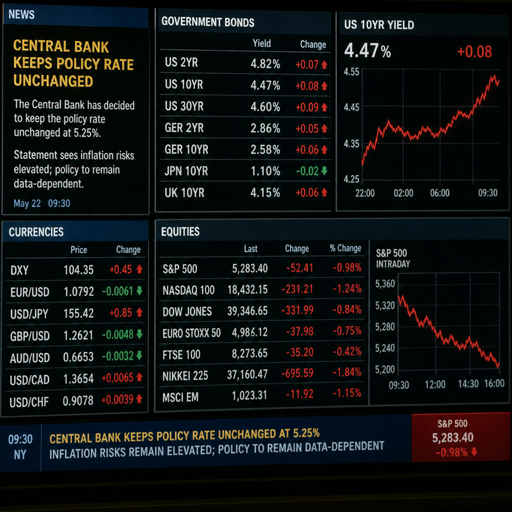
How should investors interpret unscheduled comments?
Investors should interpret unscheduled comments by comparing them with the central bank’s existing policy framework, recent economic data, and prior communication. A speech matters most when it changes the perceived balance of risks or confirms that policymakers are becoming more concerned about inflation, growth, labor markets, credit conditions, or financial stability.
The first step is to identify whether the comment is hawkish, dovish, or neutral. A hawkish tone usually implies concern about inflation or a willingness to keep policy restrictive. A dovish tone usually suggests greater concern about slowing growth, rising unemployment, or the risk of over-tightening. Neutral language tends to repeat existing guidance without adding much new information.
The second step is to ask whether the speaker is discussing current conditions or future policy. A central banker may say inflation is still elevated, but that does not automatically mean another rate increase is coming. Likewise, acknowledging slower growth does not always mean rate cuts are imminent. The policy signal depends on whether the official links those conditions to possible action.
The third step is to examine what changed. If the speech repeats previous language, the market reaction may fade quickly. If it introduces a new phrase, emphasizes a different risk, or appears soon after an important data release, the speech may carry more weight.
Common reasons central banks speak outside the schedule
Unscheduled central bank speeches can happen for many reasons. Some are routine appearances that become market-moving because the context has changed. Others are deliberately timed to influence expectations during uncertain conditions.
Market volatility needs a response
When markets move sharply, central banks may use communication to reduce confusion. A sudden rise in bond yields, stress in funding markets, or a disorderly currency move can lead officials to clarify how they view financial conditions. The goal is often to prevent markets from assuming too much or too little about future policy.
This does not mean every unscheduled remark is an emergency tool. Sometimes policymakers simply want to remind investors that decisions remain data-dependent. But when remarks follow unusual market moves, the timing is part of the message.
Economic data changes the conversation
Inflation reports, employment figures, growth data, and credit indicators can shift expectations quickly. If a major data release challenges the central bank’s previous narrative, officials may speak before the next formal meeting to explain how they are thinking about it.
For example, stronger-than-expected inflation may prompt policymakers to stress patience before easing policy. Weaker activity data may lead them to acknowledge downside risks. The speech becomes a bridge between the data and the next official decision.
Policymakers want to guide expectations
Central banks often prefer to avoid surprising markets at formal meetings. If a policy shift is becoming more likely, officials may use speeches to prepare the public gradually. This can make future central bank announcements easier for markets to absorb.
Guidance does not always arrive as a clear promise. It may appear as a change in emphasis, such as moving from “inflation risks remain high” to “policy is working as intended” or from “rates may need to rise further” to “we are assessing the cumulative impact of tightening.” The details matter.
Language clues that often matter
Central bank language is careful by design. Officials know that a single phrase can move expectations, so they tend to choose words that leave room for flexibility. Readers should pay attention to changes in wording rather than isolated phrases.
Useful language clues include:
- Confidence words: Phrases such as “more confident,” “not yet confident,” or “gaining confidence” often relate to inflation or policy timing.
- Risk balance: References to “upside risks,” “downside risks,” or “two-sided risks” can show whether policymakers are worried more about inflation or growth.
- Restrictiveness: Comments about whether policy is “restrictive enough” can influence expectations for future rate moves.
- Data dependence: This phrase can be neutral, but it matters when paired with specific data categories.
- Financial conditions: If officials mention credit spreads, bond yields, asset prices, or lending conditions, they may be assessing whether markets are helping or hurting policy goals.
- Patience and optionality: These words often suggest that the central bank wants flexibility rather than a fixed path.
The key is to compare today’s language with yesterday’s language. Central bank communication is often a game of marginal change.
Signals that a speech may be especially important
Not every unscheduled speech deserves the same level of attention. Some comments are background noise. Others can reshape the policy debate.
A speech may be important when it includes one or more of the following signals:
- The speaker is highly influential. Remarks from the head of a central bank or a key voting member usually carry more weight.
- The timing is unusual. Comments soon after major data, market stress, or political attention may be intentional.
- The language has changed. New wording can suggest that internal discussions are shifting.
- Other officials repeat the message. Consistency across speakers increases credibility.
- Markets react across several asset classes. A move in bonds, currencies, and equities together may indicate that investors see a real policy signal.
- The speech addresses a live policy question. Comments about inflation persistence, rate cuts, rate hikes, balance sheets, or liquidity conditions are more likely to matter.
These signals are not guarantees. They are prompts for deeper analysis.
How unscheduled speeches affect different markets
Central bank communication can affect markets through expectations. If investors believe rates will stay higher for longer, they may adjust bond yields, currency positions, equity valuations, and borrowing assumptions. If they believe policy may ease sooner, the opposite can happen.
Bonds and interest-rate markets
Bond markets are usually the first place to look. Yields often respond when a speech changes expectations for future policy rates or inflation. Shorter maturities may react more to near-term rate expectations, while longer maturities may reflect growth, inflation credibility, and term premium concerns.
Rate futures and swaps can also show whether the market has repriced the expected path of policy. A speech that moves these instruments may have delivered a meaningful signal, even if the words sounded cautious.
Currencies
Currencies often respond to relative policy expectations. If one central bank sounds more hawkish while another appears closer to easing, the interest-rate differential can influence exchange rates. Unscheduled central bank speeches may therefore matter most when they alter the expected gap between economies.
Currency reactions can also reflect risk sentiment. A speech that calms financial stress may support risk-sensitive currencies, while one that raises uncertainty may increase demand for perceived safe-haven assets.
Equities and credit
Equities respond to central bank communication through discount rates, earnings expectations, and risk appetite. A hawkish surprise may pressure valuations if investors expect higher borrowing costs. A dovish signal may support sentiment, especially when growth concerns are not severe.
Credit markets also watch central bank language closely. If policymakers highlight tighter lending standards or financial stability risks, investors may reassess default risk, bank funding, and corporate borrowing conditions.
A practical checklist for reading a speech
Because central bank communication can be dense, a checklist helps prevent overreaction. Instead of trading on a headline alone, work through the context.
Use this framework when reviewing unscheduled central bank speeches:
- Who is speaking? Identify the role, voting status, and influence of the official.
- Why now? Consider whether the timing follows data, volatility, a policy meeting, or market speculation.
- What is new? Compare the remarks with recent speeches, minutes, and monetary policy updates.
- Is the message conditional? Note whether the speaker ties policy to future data rather than making a firm statement.
- Which risk is emphasized? Inflation, employment, growth, financial stability, and currency pressure can point to different policy responses.
- Did markets reprice? Watch bonds, currencies, equities, and rate expectations for confirmation.
- Do other officials agree? One speech matters less than a coordinated shift in tone.
- What is the next official event? The next meeting, minutes, inflation report, or labor data may confirm or challenge the message.
This approach keeps the focus on evidence, not impulse.
Mistakes to avoid when reacting to central bank remarks
The biggest mistake is treating every unscheduled comment as a policy announcement. Central bankers often speak in probabilities, conditions, and risk scenarios. A statement that sounds forceful in a headline may be more balanced in the full transcript.
Another common error is ignoring the difference between personal views and institutional guidance. An individual policymaker may express concern, but the committee may not share that view. Unless the message is repeated by leadership or reflected in formal central bank announcements, it may not represent a durable policy shift.
It is also risky to interpret a speech without considering market positioning. If investors were already leaning heavily toward one outcome, even a mild comment in the opposite direction can trigger a large move. In that case, the market reaction reflects positioning as much as the policy signal.
Finally, avoid reading central bank communication in isolation. Monetary policy sits within a larger economic picture. Inflation trends, wage growth, productivity, fiscal policy, global demand, and financial stability all shape the decision-making environment.
The role of context in monetary policy updates
Monetary policy updates are not limited to rate decisions. They include speeches, minutes, testimony, research, interviews, and official statements. Together, these communications create a policy narrative.
Unscheduled speeches are most useful when they help explain where the narrative is heading. For example, a central bank may spend months emphasizing inflation risks, then gradually shift toward balanced risks as price pressure cools. The first signs of that shift may appear in speeches before they appear in formal statements.
Context also helps distinguish signal from noise. If an official says policy must remain restrictive, that may be unsurprising during a period of high inflation. But if the same official adds that the risks of doing too much are increasing, the second part may be the real message.
The practical implication is simple: do not ask only, “Was the speech hawkish or dovish?” Ask, “Was it more hawkish or more dovish than expected?” Markets move on surprises.
How businesses can use central bank communication
This topic is not only for traders. Businesses also benefit from monitoring central bank communication because interest rates affect financing, investment planning, currency exposure, and customer demand.
A company considering new debt may watch speeches for clues about borrowing-cost trends. An importer or exporter may monitor currency reactions to central bank announcements. A leadership team planning capital expenditure may use policy communication as one input when assessing demand, inflation, and financing risk.
The goal is not to forecast every rate move perfectly. It is to stay aware of the policy environment. When central banks sound uncertain, businesses may choose to preserve flexibility. When policymakers communicate a more stable path, planning assumptions may become easier to frame.
A simple way to build a monitoring routine
A clear routine makes central bank communication easier to manage. Without one, it is easy to chase headlines and miss the broader trend.
Consider this simple process:
- Track the official calendar. Know when rate decisions, minutes, inflation reports, and employment data are due.
- Monitor trusted news feeds for unscheduled remarks. Focus on complete context, not just headline snippets.
- Save key phrases. Compare current language with prior remarks from the same official.
- Watch market confirmation. Look for changes in yields, currencies, rate futures, and broader risk sentiment.
- Update your base case carefully. Change assumptions when the evidence shifts, not after every sentence.
- Prepare for the next formal event. Use speeches as clues, then look for confirmation in official communications.
This routine works because it treats communication as a sequence. One speech may start the conversation, but the pattern matters more than the moment.
Balanced interpretation beats headline reaction
Unscheduled central bank speeches can be valuable, but they require disciplined interpretation. They sit between informal commentary and formal policy action, which makes them powerful and easy to misread.
The best approach is balanced. Start with the speaker, timing, and exact language. Compare the remarks with recent monetary policy updates and the next expected central bank announcements. Then look for market confirmation and follow-up comments from other officials.
When handled this way, unscheduled central bank speeches become more than market noise. They become a useful window into how policymakers are thinking, what risks they are prioritizing, and how the next phase of monetary policy may take shape.
