
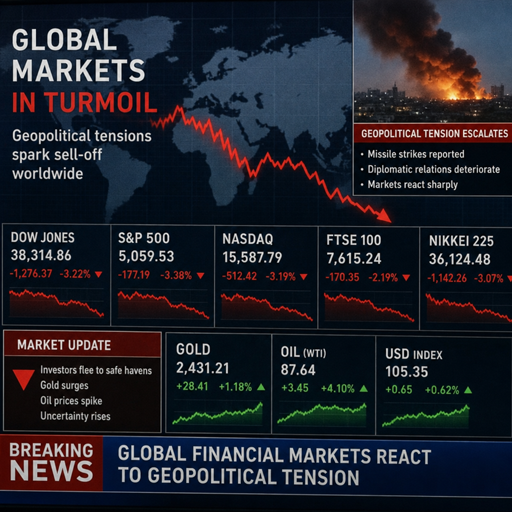
When geopolitical tension rises, money often moves before headlines settle. Investors, businesses, and households look for currency safe havens because they want liquidity, economic stability, and a practical way to reduce exposure to geopolitical risks. Understanding how safe haven currencies behave can help you make calmer decisions instead of reacting to every market shock.
What makes a currency a safe haven during geopolitical tension?
A currency becomes a safe haven when global investors tend to trust it during uncertainty. That trust usually comes from a mix of deep financial markets, strong institutions, low default risk, political credibility, and broad international use. In a crisis, the most attractive currency is not always the one with the highest return; it is often the one that feels easiest to hold, trade, and convert when conditions become unpredictable.
Geopolitical tension currency safe havens are not magic shields. They can still weaken, face inflation pressure, or move sharply when central banks change policy. Their role is more practical: they may help preserve access to liquidity and reduce portfolio stress when other assets become harder to price.
For many market participants, the appeal is psychological as well as financial. A safe haven currency can provide a sense of order when news is confusing, supply chains are strained, or investors are reassessing risk across regions.
The main forces that drive safe haven demand
Safe haven currencies usually strengthen when investors shift from seeking growth to protecting capital. This can happen during military conflict, sanctions, trade disputes, political instability, energy shocks, or concerns about the global banking system. The stronger the uncertainty, the more investors tend to value currencies backed by reliable markets and credible policy frameworks.
Several forces often work together:
- Liquidity needs: Investors want currencies they can buy and sell quickly without large price gaps.
- Institutional confidence: Stable legal systems and independent monetary authorities can support trust.
- Reserve currency use: Currencies widely held by central banks and global institutions often benefit from demand.
- Low perceived credit risk: Countries with strong repayment capacity may be viewed as safer destinations.
- Risk-off behavior: When investors reduce exposure to equities, emerging markets, or high-yield debt, they may move into safer currencies and government bonds.
These flows can happen fast. Markets do not wait for perfect information; they respond to expectations, fear, and the need to manage exposure before conditions become clearer.
Common safe haven currencies and why investors watch them
The group of safe haven currencies can change over time, but several are consistently watched during periods of geopolitical tension. Each has different strengths, and each responds to risks in its own way.
U.S. dollar
The U.S. dollar is often central to safe haven discussions because it is deeply embedded in global trade, commodities pricing, international debt, and reserve holdings. During stress, many investors need dollars to settle obligations, service debt, or hold liquid assets. This demand can support the dollar even when the original shock does not directly involve the United States.
The dollar’s safe haven role is closely tied to the depth of U.S. financial markets. Treasury securities, money markets, and dollar payment systems give investors multiple ways to hold or access dollar liquidity. However, the dollar can also be influenced by U.S. interest rates, fiscal concerns, inflation expectations, and domestic politics.
Swiss franc
The Swiss franc is commonly associated with financial security measures because Switzerland has a long reputation for political neutrality, disciplined public finances, and a stable banking environment. In times of geopolitical risks, investors may view the franc as a defensive currency.
Still, the franc is not risk-free. Its value can be affected by central bank policy, export competitiveness, and investor positioning. A very strong franc can create challenges for Switzerland’s economy, which means policymakers may respond if currency moves become disruptive.
Japanese yen
The Japanese yen has often behaved like a safe haven currency, partly because Japan has a large domestic savings base and deep government bond market. During global risk-off periods, investors may unwind carry trades, which can support the yen as borrowed yen is repurchased.
However, yen behavior can be complex. Interest rate differences, central bank policy, and Japan’s trade balance can all influence whether the yen strengthens or weakens during a particular shock. It is useful to treat the yen as a historically important safe haven, not as a guaranteed winner in every crisis.
Other currencies investors may consider
Some investors also watch currencies linked to strong public finances, commodity exposure, or regional stability. These may include currencies from countries with credible institutions and relatively resilient economies. But they may not provide the same liquidity or global acceptance as the major safe haven currencies.
That distinction matters. A currency can belong to a stable country but still be less useful in a crisis if its markets are smaller, less liquid, or more exposed to a specific regional risk.
Are currency safe havens better than other safe haven assets?
Currency safe havens are not automatically better than other safe haven assets; they serve a different purpose. Currencies can provide liquidity and flexibility, while assets such as government bonds, gold, or cash equivalents may serve income, diversification, or store-of-value goals. The right mix depends on your time horizon, risk exposure, and reason for seeking protection.
Safe haven assets often behave differently under the same conditions. For example, a defensive currency may strengthen because investors need liquidity, while gold may rise because investors worry about inflation, conflict, or confidence in financial systems. High-quality government bonds may benefit when growth fears rise, but they can struggle if inflation and interest rates are the main concern.
A useful way to think about the difference is this:
|
Option |
Typical role |
Main advantage |
Key limitation |
|---|---|---|---|
|
Safe haven currencies |
Liquidity and defensive positioning |
Easy to move and use globally |
Can be affected by central bank policy |
|
Government bonds |
Capital preservation and potential income |
Often supported during risk-off periods |
Sensitive to inflation and rates |
|
Gold |
Store of value and crisis hedge |
Not tied to one government’s credit |
No income and can be volatile |
|
Cash equivalents |
Short-term stability |
Simple and accessible |
Inflation can reduce purchasing power |
The practical takeaway is that no single safe haven solves every problem. A balanced approach often works better than trying to predict which defensive asset will perform best in the next shock.
How geopolitical risks affect exchange rates in real life
Exchange rates respond to both the event itself and the market’s interpretation of what comes next. A conflict, election shock, sanction package, or diplomatic breakdown can move currencies if investors believe it will affect trade routes, energy prices, interest rates, capital flows, or economic stability.
The reaction is not always intuitive. A country directly involved in tension may see its currency weaken because investors expect slower growth or capital outflows. But a currency from a country seen as stable may strengthen even if its economy faces indirect costs. Markets are constantly comparing relative safety, not absolute safety.
Three questions tend to shape currency moves:
- Where is capital most likely to be protected? Investors look for legal certainty, reliable settlement systems, and stable institutions.
- Which currency is most needed for payments or debt? Demand can rise when companies and investors need a specific currency quickly.
- How will central banks respond? Interest rates, liquidity support, and policy guidance can either reinforce or offset safe haven flows.
This is why geopolitical tension currency safe havens can rally sharply at first, then reverse if the perceived risk fades or policy expectations change.
Practical financial security measures for uncertain periods
You do not need to trade currencies actively to benefit from understanding safe havens. The more important step is to build financial security measures that reduce forced decisions during stressful periods. A calm plan can protect you from panic, overconcentration, and unnecessary currency risk.
Consider these practical steps:
- Review your currency exposure. If your income, expenses, investments, and debts are in different currencies, know where exchange-rate moves could help or hurt you.
- Keep adequate liquid reserves. Emergency savings in the currency you actually spend can be more useful than a complex hedge.
- Diversify thoughtfully. Holding assets across regions and currencies may reduce dependence on one economy, but diversification should match your real needs.
- Avoid all-or-nothing moves. Shifting everything into one safe haven currency can create new risks if conditions change.
- Watch debt obligations. Borrowing in a foreign currency can become dangerous if your income is in another currency.
- Separate short-term protection from long-term investing. A safe haven position may reduce near-term volatility, but long-term goals still require growth planning.
For businesses, the same logic applies with added urgency. Companies that import, export, or pay suppliers internationally should consider invoicing terms, cash buffers, hedging policies, and supplier concentration before geopolitical tension intensifies. Waiting until exchange rates move sharply can limit options.
A simple checklist before moving into safe haven currencies
Before making a currency decision, slow the process down. Safe haven currencies can be useful, but reacting emotionally can lead to poor timing, high costs, or exposure that does not match your actual risk.
Use this checklist as a starting point:
- Define the risk. Are you worried about market volatility, inflation, banking stress, war, sanctions, or your personal cash flow?
- Clarify the time horizon. A short-term hedge should not be treated like a permanent investment strategy.
- Check your base currency. Protection only makes sense relative to the currency you earn, spend, or owe.
- Consider transaction costs. Spreads, fees, taxes, and account restrictions can reduce the benefit of frequent currency moves.
- Avoid chasing headlines. By the time a story dominates the news, part of the currency move may already have happened.
- Think in scenarios. Ask what happens if tension escalates, stabilizes, or fades faster than expected.
This checklist does not replace professional advice, but it can help you ask better questions and avoid decisions based solely on fear.
The limits of relying on safe haven currencies
Safe haven currencies are useful, but they have limits. They can become crowded trades, meaning many investors may rush into the same position and then rush out when sentiment improves. They can also be weakened by domestic economic issues, unexpected policy shifts, or changes in interest rate expectations.
There is also a difference between safety and suitability. A currency may be considered safe by global markets, but it may not be suitable for someone whose expenses, taxes, or liabilities are in another currency. If you need dollars to pay bills, holding another currency simply because it is defensive could introduce extra complexity.
The best use of safe haven thinking is not prediction. It is preparation. By understanding why investors turn to certain currencies during geopolitical tension, you can design a more resilient financial plan and avoid being surprised by market behavior.
Key takeaway
Geopolitical tension currency safe havens matter because they reveal where investors look for liquidity, trust, and economic stability when uncertainty rises. The U.S. dollar, Swiss franc, Japanese yen, and other defensive currencies can play an important role alongside broader safe haven assets, but none of them removes risk completely.
A stronger approach is to combine awareness with discipline: know your exposure, keep enough liquidity, diversify with purpose, and avoid dramatic decisions driven by headlines. Safe haven currencies can support financial security measures, but the real advantage comes from having a plan before geopolitical risks test the market.